
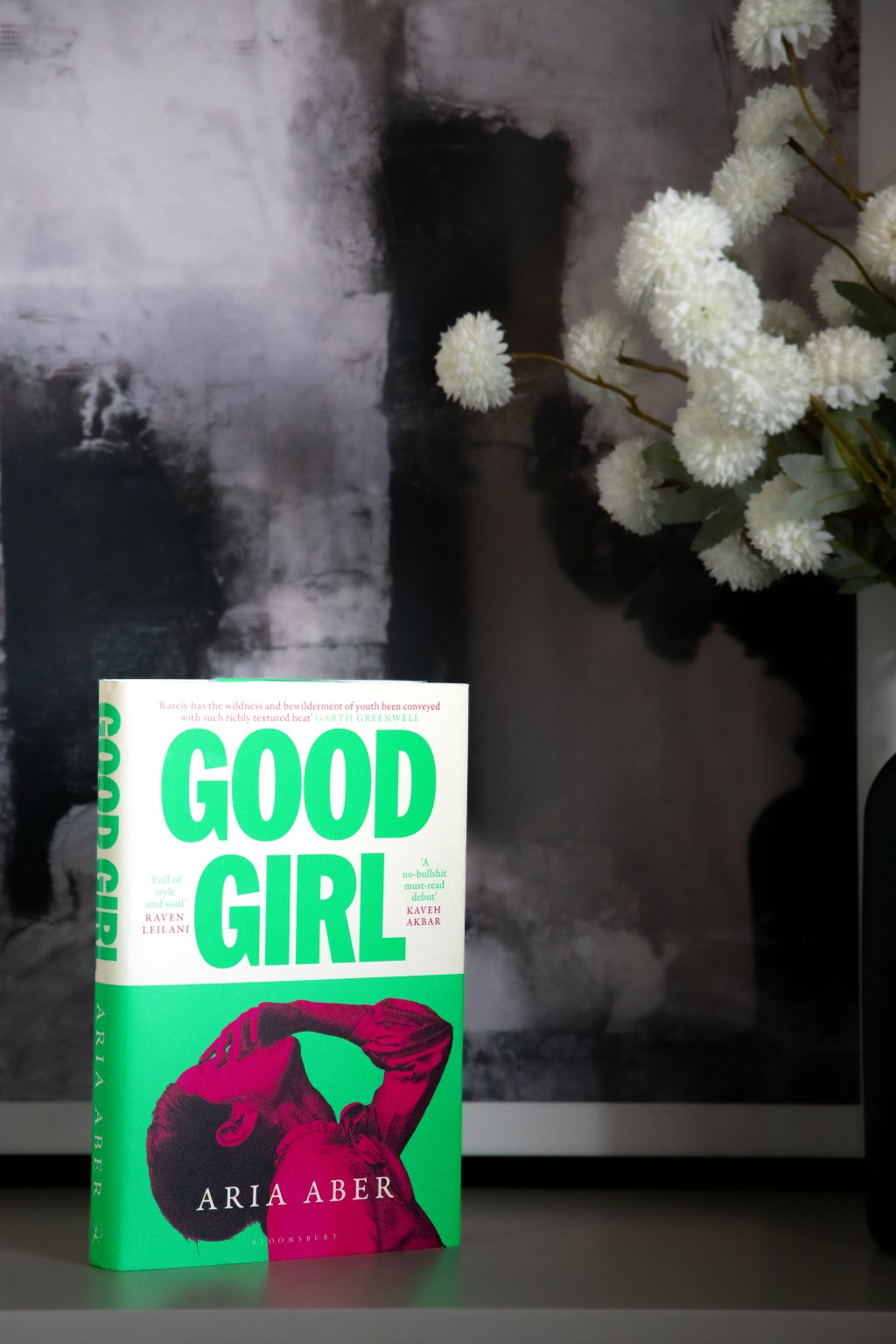
Let me start by saying Good Girl absolutely wrecked me. Not in a sobbing-on-the-floor kind of way, but in that deep, disorienting, quietly-knocks-the-air-out-of-you way. I picked this up because it was shortlisted for the Women’s Prize and I was intrigued, given how much I loved the other longlisted and shortlisted books that I’d read.
Aber gives us Nila (or Nilab), a Berlin-born daughter of Afghan refugees, stumbling through her grief, identity, art and self-loathing in a post 9/11 world. She lies, reinvents, seduces and self-destructs. She wasn’t to be seen but only on her terms. she wants to be loved, but doesn’t know what love without control looks like. this is a bildungsroman soaked in techno, yearning, shame, and some of the most lyrical writing I’ve read all year.
The Messy Business of Identity
This book is, at its core, about the mental toll of dual identity. Of passing and hiding. Of growing up brown and Muslim in a Europe that insists on Othering you again and again. Nila’s self-erasure isn’t just a coping mechanism; it’s survival. She lies about being Greek, Colombian, Israeli. Anything but Afghan. And that lie is both heartbreaking and painfully relatable.
Aber captures with painful clarity the contradictions of diasporic girlhood: the burden of being a “good daughter”, the legacy of shame around sex and self-expression, the disconnect from a family who cannot say “I love you” but would throw themselves into fire for you. Nila’s internal conflict is so raw and unvarnished, I felt like I was watching someone peel back their own skin.
Enter: Marlowe Woods (Red Flag Central)
Ah yes, the self-important older man who talks about Nabokov and throws edgy parties. Marlowe is equal parts seductive and revolting, and Aber writes him perfectly. Their relationship is a car crash in slow motion – one that Nila, heartbreakingly, dives straight into. She thinks he’s her escape hatch. He turns out to be just another prison.
And yet, Aber never reduces Nila to a victim. She’s messy, she’s complicit, she’s aware of her self-sabotage. But she’s also just 19, grieving a mother and a homeland she barely knew, trying to make art and sense of the world around her. I didn’t always like her choices, but I always understood her.
A Poet’s Pen
It should come as no surprise that Aber is an award-winning poet. Her sentences sparkle and sting. She writes Berlin with a grungy, pulsating life. Her metaphors are daring, her prose unflinchingly beautiful even when it’s describing something ugly.
There are so many lines I committed to memory in awe. One that stick with me: “I wanted what my male cousins had, which was the privilege to be unbounded by an ancient idea of honour and purity.” Oof.
Final Thoughts
Is Good Girl perfect? No. The final act is a bit drawn-out and there’s definitely a millennial-lit bingo card to be played here. But it’s also one of the most alive books I’ve read this year. Angry, aching, stunning.
This is not a tidy novel. It’s a novel of contradictions and shadowed corners. Of secrets and shame and the slow, jagged path to reclaiming your story. And if you’ve ever felt torn between cultures, languages, versions of yourself – this book might cut a little too close. But in the best way.
Highly, highly recommend.
 Books With Megz