
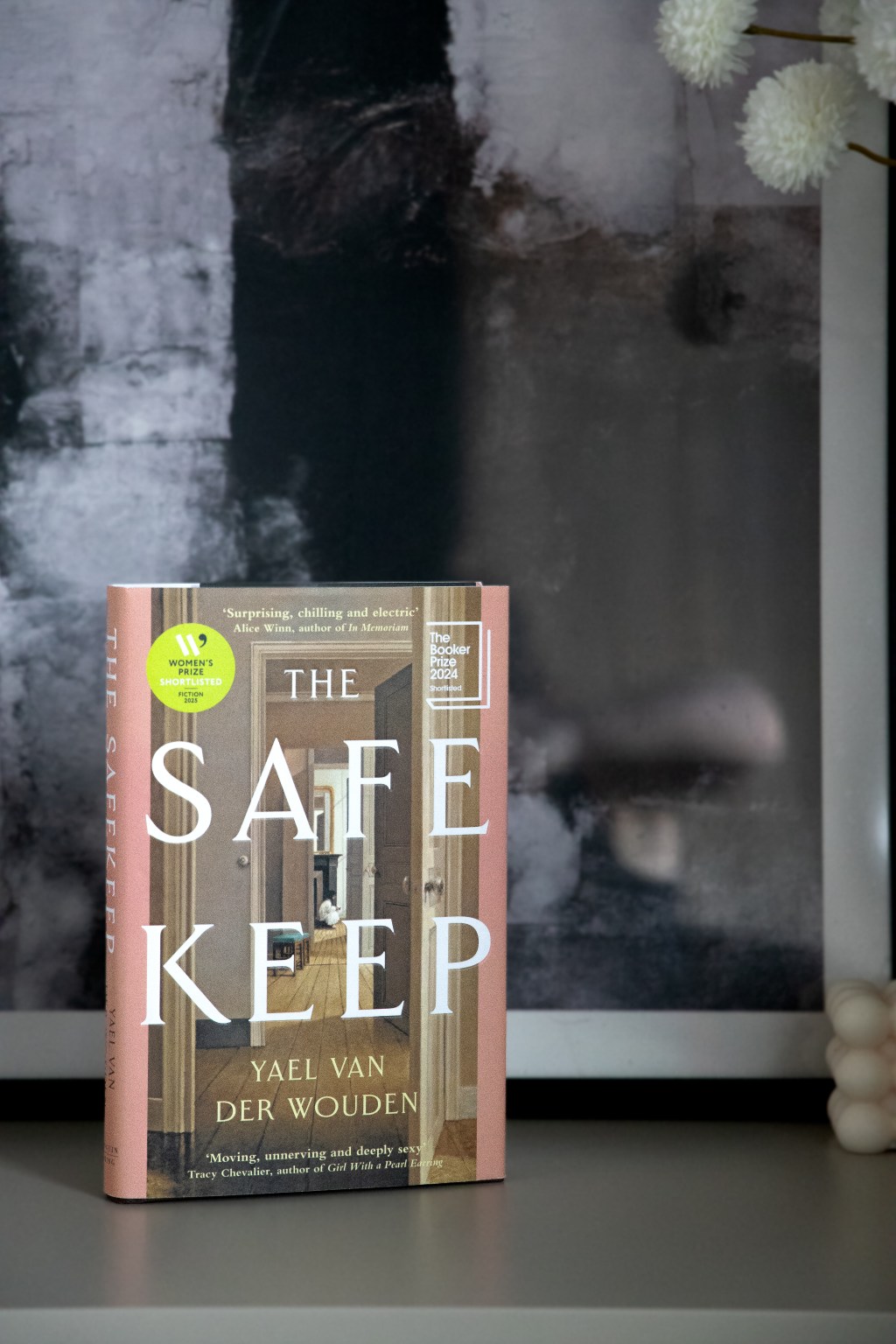
I finally picked up The Safekeep after seeing it buzz around the Women’s Prize shortlist – and I’m so glad I did. This one’s not just a historical novel, or a slow-burn romance, or a psychological character study. It’s all three – and then some.
We follow Isabel, who lives alone in her dead mother’s house in 1960s rural Netherlands. She’s prickly, cold, and often unlikeable…and absolutely fascinating. The kind of character you’d never want to live with, but can’t stop reading about. She’s obsessively attached to the house, the objects in it, the memories tucked away in its corners. Everything is scrubbed, polished, preserved. And honestly? She’s emotionally preserved too – like she’s embalmed her grief into every piece of furniture.
Then in breezes Eva – her brother’s latest girlfriend – who’s been unceremoniously dumped on Isabel for the summer while he gallivants abroad. And that’s when things start to shift. Eva is warm, chaotic, vibrant – the antithesis of Isabel. Their forced cohabitation is tense, sensual, and wildly compelling. At first, Isabel bristles against Eva’s very presence. But slowly – so slowly – her obsessive gaze shifts. She becomes attuned to Eva, the way she was attuned to the house. And the result is a delicious, claustrophobic atmosphere that’s all longing and suppressed tension.
But it’s not just about desire. There’s something deeper simmering beneath the surface. The house itself is loaded with unspoken history. It once belonged to a Jewish family – a fact that, like so much in this novel, goes unacknowledged for a long time. The war haunts every corner of story, not through graphic scenes, but through the silence, the secrets, the objects that weren’t returned, and the people who never came back. And the characters – especially Isabel – are compliant in that silence.
The writing is stunning. Van der Wouden’s prose is spare but immersive, and there were so many lines that stopped me in my tracks. It’s an intense read – especialy in the middle section, which is undeniably sensual.
By the end, I felt like I’d lived inside that house. This book felt like a slow untangling – of guilt, grief, longing, and history – and I was totally swept up in it.
Have you read this one yet? Did you see the twist coming? And how do we feel about endings that are hopeful but not quite tidy?
 Books With Megz