
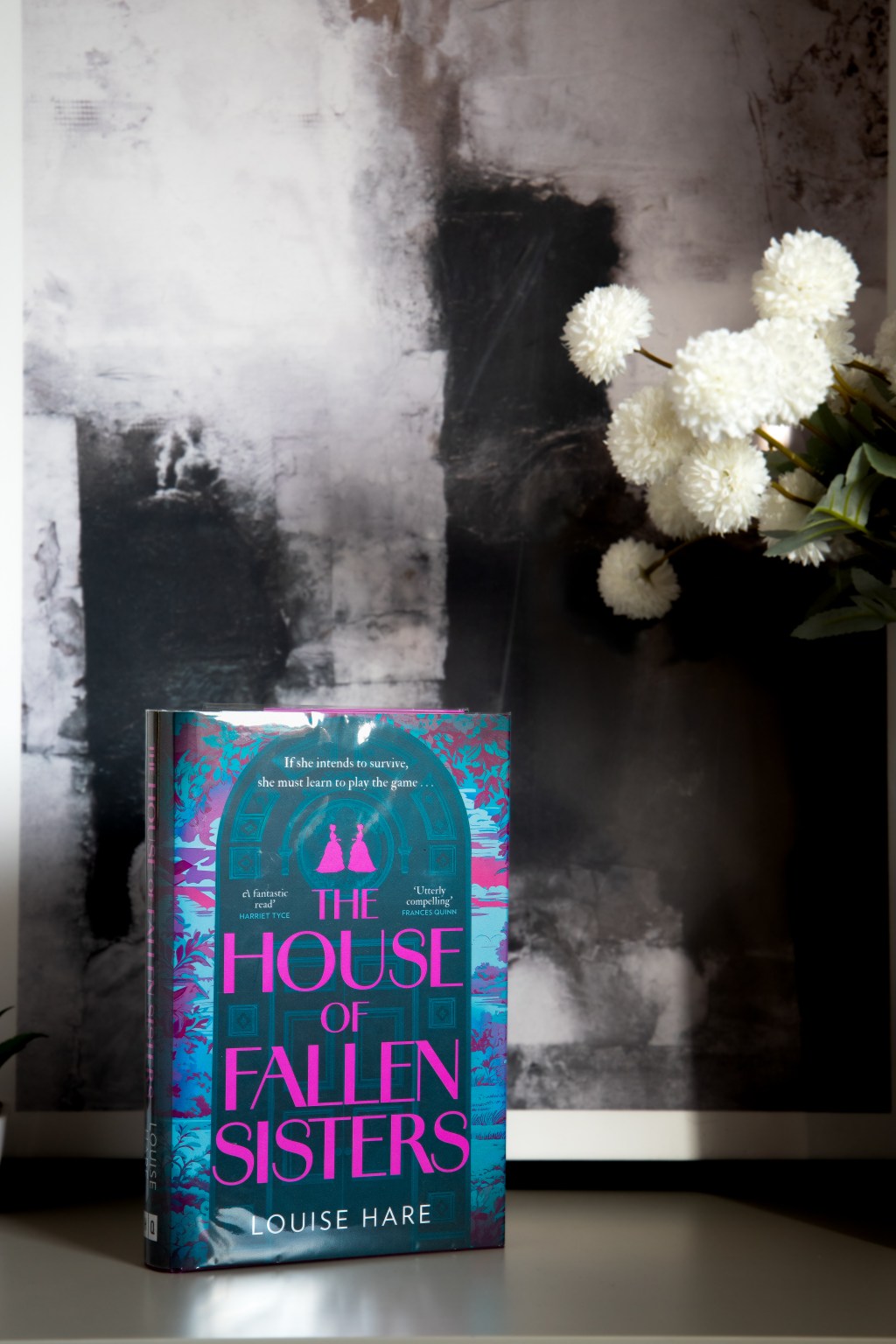
I gave The House of Fallen Sisters 4.5/5, and I read it in a day.
That probably tells you most of what you need to know.
It was so far from the London that I was used to seeing in historical fiction. It portrayed a much darker reality of prostitution, poverty, race, violence and the very limited opportunities available to women who weren’t privileged enough to be afforded money or status.
And that made it a lot easier to empathise with the characters.
What is The House of Fallen Sisters about?
The story focuses on Sukey Maynard, a mixed-race young woman living in a Covent Garden brothel during the 18th century. Together with her friend Emily, they have been pulled into a world where their options are brutally limited. The novel starts with Sukey’s attempt to escape the auction of her virginity, before ultimately failing and being returned to the brothel.
There is also a wider conflict between rival madams, while another storyline follows Sukey’s growing awareness of her own racial identity and her involvement in the conflict surrounding Jonathan Strong, a real-life historical figure connected with the British abolitionist movement.
It may seem quite bleak but love, friendship and mystery kept it engaging and wholesome despite the backdrop.
The brothel is both exploitative and protective
This was probably the most intriguing duality of the story.
The brothel is obviously exploitative. Young women are being pushed into prostitution, and the lack of choice is horrific. But it also feels strangely protective.
The women have somewhere to sleep, people around them, some form of structure and, however flawed, a degree of protection from their madam who prevents them from simply being abandoned on the streets.
That contradiction made the whole setting feel much more complicated than “good people versus bad people”.
Nobody is operating in a world with easy choices.
Georgian London without the glamour
Historical fiction often gives us the wealthy side of Georgian or Regency life: dresses, drawing rooms, balls, estates and aristocratic scandals.
The can be great fun, but most of us are so far removed from that level of privilege that it can sometimes be harder to emotionally connect with.
The House of Fallen Sisters felt much more rooted in survival.
The Georgian London portrayed in The House of Fallen Sisters is crowded, dangerous and unforgiving. The women are not worrying about making a good marriage like we might see in Bridgerton. They are worrying about food, shelter, disease, violence and their immediate community.
The real meaning of “sisters”
The title works particularly well because the women are not literal sisters, but there is solidarity between them.
They are all living in a deeply exploitative environment, but there is still friendship, loyalty, protection and a sense that they understand one another in a way people outside the house never could.
That sisterhood never felt overly sentimental either. It’s not all ‘girl power’. They are not one big happy family. They are people surviving the same world.
The Jonathan Strong storyline
I also loved the Jonathan Strong storyline.
Strong was a real historical figure: an enslaved man brought from Barbados to London whose case became significant in the developing British abolitionist movement.
Sukey being mixed-race gives her a much more personal interest in his fate, and I liked the way she and her friends become involved and try to help him. It also broadens the book beyond the brothel and gives us an insight into further dynamics at play in society during this period.
The novel is looking at different forms of powerlessness in Georgian society — gender, race, class, slavery — and how those systems overlap.
Was there anything I didn’t like?
Honestly, nothing specific.
That is probably the strangest thing about my 4.5/5 rating.
I cannot point to one obvious flaw and say “that is why it was not five stars”.
It was more of an intangible feeling.
But I also read the entire thing in a day, so clearly whatever tiny thing held it back did not stop me wanting to know what happened.
Final thoughts
I really loved this.
It was dark, immersive and much more emotionally affecting than I expected.
What stayed with me most was not just the mystery, but the way the book looked at women whose lives are usually either ignored or sanitised in historical fiction.
It showed the exploitation, but also the friendships. The danger, but also the protection. The lack of choice, but also the ways these women still tried to claim some agency for themselves.
If you like historical fiction that shows the past without polishing away the uncomfortable parts, I would absolutely recommend it.
Rating: 4.5/5
 Books With Megz