
Reading Mood: I want something sharp and thought-provoking
Rating: ★★★★☆
Content Warnings: Misogyny, rape, sexual violence, domestic abuse, online abuse, extremist ideology, racism, mass violence, suicide, murder and violence against women.
Quick Verdict
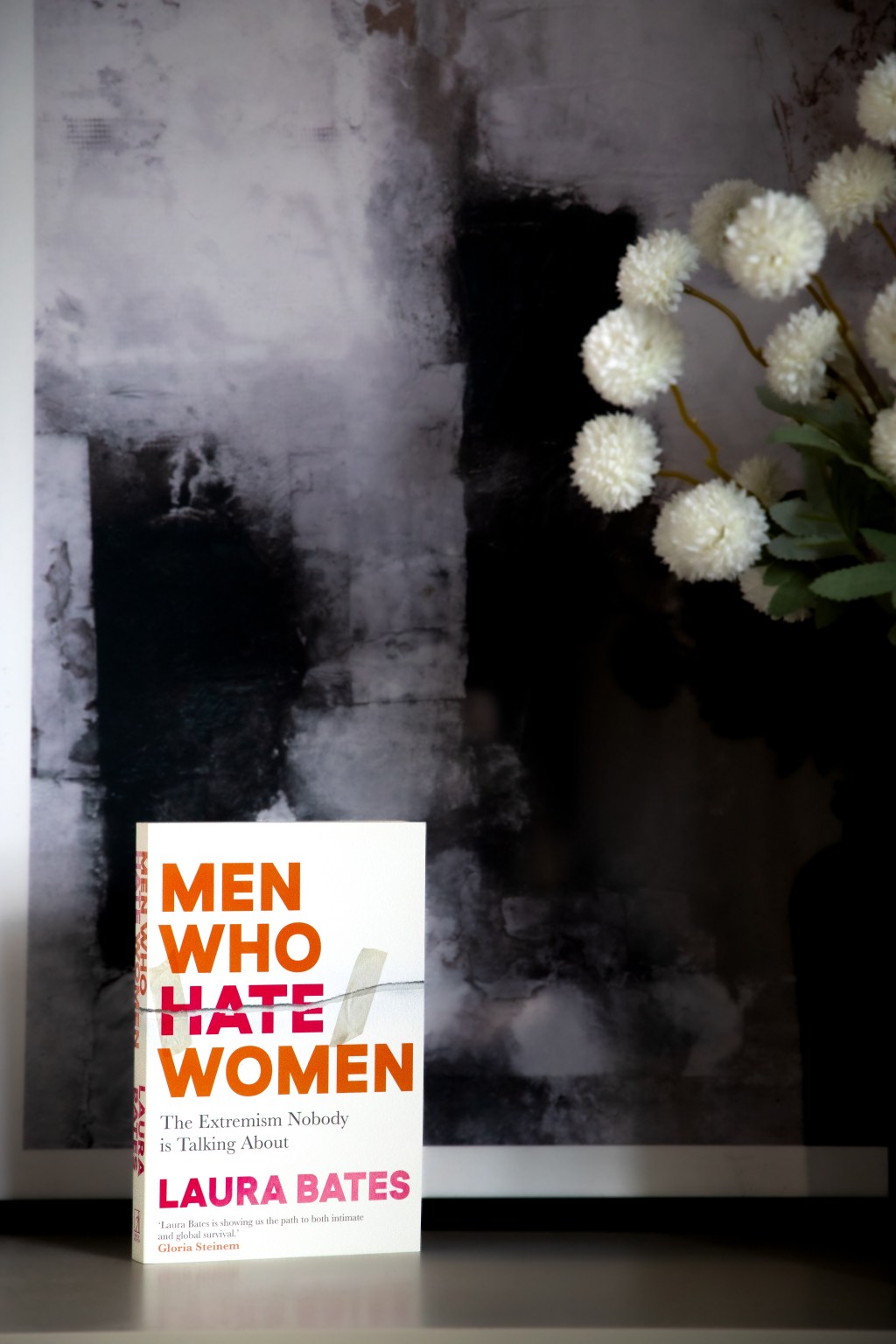
Men Who Hate Women is a disturbing, eye-opening and deeply researched look at the online communities where misogyny is not just normalised, but radicalised.
This was probably my least favourite of the Laura Bates books I’ve read so far – but that says more about how strongly I connected with her other books than it does about the quality of this one. Men Who Hate Women is still excellent: urgent, chilling and incredibly important. It just felt, for me, a little more difficult to sit inside for long stretches.
Bates takes the reader into the “manosphere”: a network of online spaces including incels, men’s rights activists, pickup artists and other communities built around male grievance, sexual entitlement and hostility towards women. What she finds is horrifying, not only because of the extremity of the views themselves, but because of how easily those views leak into mainstream culture.
This is not a book about a weird fringe corner of the internet that has nothing to do with the rest of us. That is precisely the comfort Bates wants to take away.
What is Men Who Hate Women about?
In Men Who Hate Women, Laura Bates investigates the online communities that make up what is often called the manosphere: a loose ecosystem of websites, forums, podcasts, blogs, YouTube channels and chatrooms where misogyny is repackaged as truth, self-help, political awakening or male liberation.
The book focuses heavily on incels – men who describe themselves as “involuntarily celibate” – but Bates also explores pickup artists, men’s rights activists, Men Going Their Own Way, and the wider networks that connect misogyny with racism, white supremacy, anti-feminism and extremist violence.
Her central argument is that these communities are not harmless. They are not just sad men venting online. They are not just dark humour, edgy memes or private frustration. They are part of a wider culture that normalises hatred of women, frames female autonomy as oppression, and treats male entitlement as a political grievance.
That is what makes the book so unsettling. Bates is not simply describing online nastiness. She is describing a pipeline.
The origin of incels is one of the saddest parts of the book
One of the most striking parts of the book is the origin story of the word “incel”.
It did not begin as a hate movement. It began with Alana, a woman in her twenties who felt lonely and struggled to find love. She started a small online project for people experiencing involuntary celibacy – a place for support, vulnerability and connection. The original idea was inclusive and sympathetic: people of different genders and sexualities sharing experiences of loneliness.
More than twenty years later, that little project has mutated into something almost unrecognisable.
That transformation is genuinely haunting. What began as a space for lonely people to feel less alone became, in some corners of the internet, a world of violent misogyny, entitlement and rage. Bates captures the bleak irony of that evolution so well. There is something deeply sad about the fact that a project created to soften loneliness was eventually warped into a culture that hardens it into hatred.
And that is one of the book’s most uncomfortable insights: loneliness itself is not the problem. Rejection is not the problem. Pain is not the problem. The problem is what happens when pain is processed through entitlement, misogyny and communities that reward escalation.
Incel logic is a trap with no exit
Bates is very good at exposing the contradictions within incel ideology.
Women are hated for sleeping with men and hated for refusing to sleep with men. Women are condemned as promiscuous, shallow and morally corrupt if they have sex, but also blamed for men’s suffering if they do not. Female sexuality is treated as both disgusting and owed. Women are supposedly too powerful, too free, too selective, too available, too unavailable, too sexual, not sexual enough.
There is no way for women to win inside this worldview, because the point is not consistency. The point is blame.
That was one of the things I found most disturbing: the sheer circularity of it all. Women are responsible for men’s loneliness. Women are responsible for men’s anger. Women are responsible for men’s violence. Women are responsible for male suffering because they have the freedom to choose who they do or do not want.
At its most extreme, the logic becomes chillingly clear. If women’s autonomy is the source of male pain, then the “solution” these communities imagine is the removal of that autonomy. The problem is not really women having sex. The problem is women choosing.
And once you see that, the ideology becomes much harder to dismiss as pathetic internet whining. It is political. It is about power.
The manosphere is not just about sex – it is about control
One of the strongest arguments in the book is that the manosphere is not simply about men wanting sex, relationships or validation. It is about control.
At the root of many of these communities is the belief that men are entitled to dominance: over women, over sex, over reproduction, over the family, over public life. Bates draws clear connections between misogynistic ideology and white supremacy, particularly where both are obsessed with hierarchy, control and the fear of losing status.
That connection makes the book feel much bigger than a study of one online subculture. It becomes a book about backlash. About what happens when equality is perceived as oppression by people accustomed to dominance. About how feminism, women’s sexual freedom and social progress become reframed as attacks on men.
This is where Bates’ work is at its most alarming. She shows how ideas that begin in obscure online spaces do not stay there. They travel through memes, influencers, YouTube channels, forums, comment sections, dating advice, political rhetoric and “just asking questions” culture. They become jokes. Then talking points. Then grievance. Then ideology.
And by the time they surface in more mainstream spaces, they often arrive wearing a slightly more respectable outfit.
The online world is the real world
One of the most important points Bates makes is that we have to stop treating the internet as separate from real life.
It is comforting to imagine a hard boundary between “online” and “offline”, as though violent misogyny on the internet is safely contained behind a screen. But Bates shows how false that distinction is. Online spaces shape beliefs, reward behaviour, create communities, radicalise users and spill into real-world harm.
This is especially important when talking about violence against women. Misogyny is already minimised offline. It is dismissed as banter, flirtation, a private matter, a misunderstanding, a few bad men. Online, that minimisation becomes even easier. It is “just a joke”. “Just trolling.” “Just satire.” “Just free speech.” “Just words.”
But words do things. Communities do things. Ideologies do things.
That is why the book feels so urgent. Bates is not arguing that every man who posts misogynistic content will commit violence. She is arguing that these spaces create conditions in which hatred is normalised, women are dehumanised and violence becomes imaginable, justifiable or even celebrated.
That should worry us.
Free speech, or freedom from consequences?
I also really appreciated Bates’ handling of the free speech argument.
So often, when extreme misogyny is challenged, the defence is framed around freedom of speech. But Bates is sharp on the difference between the right to speak and the supposed right to be amplified, agreed with, protected from criticism, shielded from consequences and handed an audience.
That distinction matters.
Nobody is entitled to radicalise others without challenge. Nobody is entitled to use “free speech” as a shield for violent misogyny, racism or abuse. And nobody is entitled to demand that women quietly absorb threats and dehumanisation so that men can feel their grievances have been respectfully platformed.
The book is very good at showing how the language of rights can be twisted. In manosphere spaces, “men’s rights” often seems less concerned with genuine male wellbeing than with restoring lost entitlement. “Free speech” becomes freedom from accountability. “Dating advice” becomes manipulation. “Self-improvement” becomes domination. “Loneliness” becomes a justification for hatred.
It is grim. But it is also clarifying.
The rape myths section is infuriating
One part of the book that really stayed with me is Bates’ discussion of rape myths and false allegations.
There is a persistent cultural image of rape as something that happens in dark alleyways, committed by shadowy strangers against women who failed to protect themselves properly. That myth is useful because it makes male violence seem exceptional and distant, rather than deliberate choices made by real men, often known to the victim.
It also keeps the focus on women’s behaviour. What was she wearing? Where was she walking? Had she been drinking? Why was she alone? Why did she trust him?
Again and again, the question becomes: what did she do wrong?
Bates also challenges the obsession with false allegations. The fear of men being falsely accused is treated in some spaces as though it is a widespread epidemic, despite evidence showing false allegations are rare. One statistic Bates cites is especially stark: the average adult man in England and Wales has an estimated 0.0002% chance of being falsely accused of rape in a year. Men are actually statistically far more likely to be raped themselves than to be falsely accused of rape.
And yet public conversation so often bends protectively around hypothetical falsely accused men, rather than actual victims.
That imbalance says a lot about whose pain we are taught to imagine.
The statistics are devastating
As with Bates’ other books, the statistics matter because they make the scale impossible to ignore.
Over a third of women worldwide have experienced physical and/or sexual violence, excluding sexual harassment. Around 137 women and girls are killed by an intimate partner or family member every day. These numbers are so large they almost become impossible to absorb, but Bates’ point is that we must absorb the,.
Because the manosphere does not exist in a neutral world. It exists in a world where violence against women is already widespread. Where rape myths already flourish. Where domestic abuse is already normalised. Where women are already blamed, disbelieved and told to be careful.
So when online communities dehumanise women, celebrate male entitlement or glorify violence, that is not happening in isolation. It is happening inside a culture that already struggles to take women’s safety seriously.
That is why the book is frightening. Not because every misogynistic forum user is a future terrorist, but because these communities intensify beliefs that already have deep roots.
Why this was not my favourite Laura Bates book
This is a very good book, but it was not my favourite Laura Bates.
Partly, I think that is because Men Who Hate Women is necessarily more focused on explaining and mapping an ecosystem. There is a lot of taxonomy: incels, pickup artists, men’s rights activists, MGTOW, forums, platforms, ideologies, overlaps, contradictions. That work is important, but it can also feel relentlessly bleak.
Compared with Fix the System, Not the Women, which felt broader and more directly connected to the institutions women move through every day, this book sometimes felt more like being taken through the darkest corridors of the internet with a torch. Necessary, but not exactly pleasant.
There were moments where I admired the research more than I emotionally connected with the reading experience. And I didn’t find the narrative as engaging as The New Age of Sexism, so I sometimes found myself needing to step away from it.
What Bates does brilliantly
What Bates does brilliantly is refuse to let the reader dismiss these communities as laughable.
It would be easy to mock incel logic because so much of it is obviously contradictory and absurd. And yes, there are moments where the lack of self-awareness is almost unbelievable. Bates notes the strange fact that men can spend endless hours discussing their lack of romantic success while apparently never considering that their hatred of women might be part of the issue.
But Bates does not stop at ridicule. She takes the threat seriously.
That seriousness is what makes the book important. Misogyny does not have to be intellectually coherent to be dangerous. Extremism does not have to be logical to cause harm. The fact that an ideology is pathetic does not mean it is powerless.
That is probably the book’s central warning: do not mistake absurdity for harmlessness.
Final thoughts
Men Who Hate Women is a chilling, serious and necessary book about the online networks where misogyny is nurtured, intensified and weaponised.
It was not my favourite Laura Bates book, but it is still a great one. It is meticulously researched, deeply alarming and very effective at showing that online misogyny is not just “online”. It shapes real attitudes. It feeds real violence. It influences political policies. It gives language and community to men who believe women’s freedom is the source of their suffering.
The most frightening thing about the book is not that these communities exist somewhere in the darkest corners of the internet. It is that their ideas do not always stay there. They travel. They soften. They reappear in jokes, podcasts, politics, headlines, comment sections and conversations about “men’s rights” that are really about women’s subordination.
Bates asks us to take this seriously before more harm is done.
And she is right.
Because misogyny does not become harmless just because it is typed into a forum. The online world is the real world. The language is real. The hatred is real. The consequences are real.
Four stars from me: not my favourite Laura Bates, but absolutely worth reading.
 Books With Megz