
Reading Mood: I want something sharp and thought-provoking
Rating: ★★★½
Content Warnings: Surveillance, detention, incarceration, institutional control, psychological distress, references to violence and threats of violence
Quick Verdict
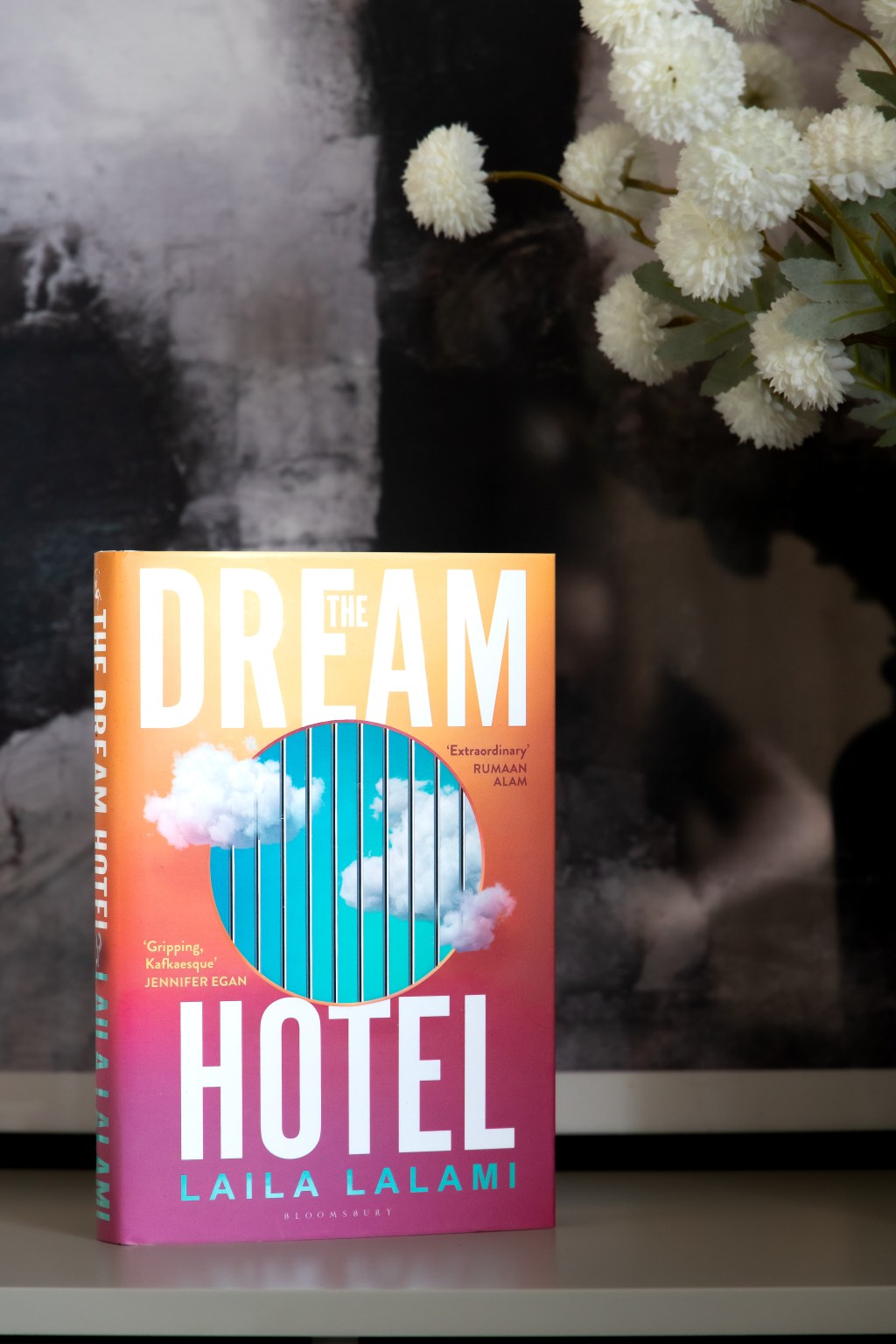
The Dream Hotel by Laila Lalami is a clever, unsettling speculative novel about surveillance, predictive technology and what happens when our most private selves become data to be analysed, owned and used against us.
I picked this up last year because it was longlisted for the Women’s Prize for Fiction 2025, and I can absolutely see why it caught the judges’ attention. It is timely, intelligent and worryingly plausible – the kind of dystopian fiction that does not feel very far away from the world we are already living in. Which is always fun. Love a book that makes you glance suspiciously at your phone like it personally betrayed you.
For me, this was a strong 3.5-star read. I really admired the ideas, the central premise and the questions Lalami asks about freedom, safety and control. But I did not feel completely swept away by the story itself. I thought it was thought-provoking, but slightly more intellectually gripping than emotionally gripping.
Still, it has stayed with me.
What is The Dream Hotel about?
The Dream Hotel is set in a near future where surveillance has become intimate, constant and largely accepted. People are monitored not just through their phones, movements and transactions, but through their dreams.
Sara Hussein, a museum archivist and mother, is travelling home to Los Angeles after a work conference when she is stopped at the airport by agents from the Risk Assessment Administration. Their algorithm has determined that, based on data collected from her dreams, she is at risk of committing a crime against her husband. She has not done anything. She has not harmed anyone. But she is deemed a future threat.
For safety reasons – that lovely phrase that so often makes authoritarianism sound polite – Sara is sent to a retention centre for twenty-one days of observation.
What follows is a speculative mystery and dystopian critique about predictive policing, algorithmic decision-making, corporate data ownership and the terrifying slipperiness of freedom once safety becomes the ultimate justification for control.
A dystopia that feels uncomfortably close
The most effective thing about The Dream Hotel is how plausible it feels.
This is not a dystopia with flying cars, dramatic world-building or a completely unrecognisable political order. Its horror lies in how close it feels to the systems we already accept. We already live in a world where our phones know where we are, what we buy, what we search, what we read, how long we hover over something, who we talk to, what we are likely to want next.
Lalami simply pushes that logic one step further.
What if sleep was no longer private? What if dreams could be recorded, interpreted and turned into evidence? What if risk could be calculated before action? What id a person could be detained not because of what they had done, but because of what an algorithm predicted they might do?
That is the central terror of the novel. It is not really about dreams. It is about ownership. Who owns your data? Who interprets it? Who benefits from it? Who gets to decide what it means? And what happens when the line between prediction and accusation disappears?
One of the ideas that really stayed with me is Sara’s recognition that people are too quick to blame “the algorithm”, when the algorithm was created by people. That distinction matters. It is convenient to treat technology as neutral, inevitable or almost natural, but Lalami keeps reminding us that these systems are designed. They reflect choices. They reflect priorities. They reflect power.
The machine may make the decision, but people built the machine.
The book is strongest when it interrogates freedom
For me, the strongest thread in the novel is freedom.
Sara’s detention is framed as temporary, rational and preventative. She is not being punished, exactly. She is being observed and assessed. She is being kept somewhere “for safety”. But that is what makes it so sinister. The language of care and protection becomes a cover for containment.
Lalami is very good at showing how easily freedom can be reframed as risk. Privacy becomes suspicious. Emotion becomes data. Dreams become evidence. Resistance becomes non-compliance. And once that shift happens, the individual is trapped. How do you prove you are not going to do something? How do you defend yourself against a prediction? How do you argue with a system that has already decided your inner life belongs to it?
The novel’s most interesting question is not whether Sara is dangerous. It is whether a society obsessed with eliminating risk can still meaningfully call itself free.
I loved the idea that freedom is not a blank slate or a perfectly safe space. Freedom is messy, relational, complicated and risky. It exists in the world with other people, not in a sealed environment where every possible danger has been managed out of existence. The book is very alert to the seductive nature of safety, and how easily it can be used to justify surveillance, detention and control.
And, as ever, the people most likely to lose their freedom are not usually the people designing the system.
Sara is an interesting lens, but I wanted more emotional depth
Sara is a compelling protagonist in theory: a historian, a mother, a wife, an archivist, a woman whose private mind is suddenly treated as public evidence. Her professional background is a clever choice because she understands records, memory, preservation and interpretation. She knows that what is kept, catalogued and labelled can shape how a life is understood.
That makes her situation even more disturbing. She has spent her career thinking about history and archives, only to find herself reduced to a file, a score, a risk category.
I liked that aspect of her character a lot. There is something very sharp about placing an archivist inside a surveillance state. Sara understands the power of documentation, but she is powerless over the documentation being created about her.
That said, I did sometimes feel slightly held at a distance from her emotionally. I understand her fear, anger and confusion, but I did not always feel them as deeply as I wanted to. The premise is so strong that I occasionally wished the character work had hit me harder.
This is probably why the book landed at 3.5 stars for me rather than 4 or 5. I loved the premise more than I loved the execution.
The retention centre is quietly horrifying
The Madison retention centre is one of the most unsettling parts of the novel because it is not presented as an overtly brutal prison, at least not in the most obvious dystopian sense. Its horror is more bureaucratic. It is rules, schedules, observation, compliance, waiting, being managed.
That kind of institutional atmosphere can be more frightening than outright chaos because it feels so mundane. Nobody needs to scream when the system has forms, procedures and polite explanations.
Lalami captures the psychological violence of being trapped inside an institution that insists it is acting reasonably. Sara’s detention is not framed as cruelty. It is framed as process. And that is exactly what makes it so frightening. The system does not need to hate her. It simply needs to classify her.
There is also something very gendered in the way Sara is watched, interpreted and contained. One of the lines I highlighted was about being a woman meaning watching yourself not only through your own eyes, but through the eyes of others. That felt central to the novel. Sara is not just under state surveillance; she is also caught in a more familiar kind of female self-surveillance. The awareness of being watched. Judged. Interpreted. Misread.
The technology may be futuristic, but that feeling is not.
The law is not the same as morality
Sara has not done anything morally wrong, but the boundaries have shifted around her. Suddenly she is on the wrong side of a line she did not draw. Lalami explores the idea that crime is not fixed or absolute; it is defined by law, and law is shaped by power.
I found this really interesting because it pushes the novel beyond a simple “technology is bad” argument. The technology matters, obviously, but the deeper issue is authority. Who gets to decide what counts as dangerous? Who gets labelled a threat? Who gets detained for the public good? Who has the power to move the line of legality and then punish the people left standing on the wrong side of it?
That is where The Dream Hotel feels most politically effective. It is not only asking whether algorithms can be wrong. It is asking what happens when algorithmic error is backed by institutional power.
A mistaken prediction is one thing. A mistaken prediction with the force of the state behind it is something else entirely.
The corporate ownership of the self
There is a chilling passage in the book about generations who have never known a life without surveillance and who accept corporate ownership of data as a fact of life. That felt horribly believable. Most of us already hand over extraordinary amounts of information in exchange for convenience, entertainment, connection or just the basic ability to function in modern society.
We click accept. We wear the device. We sync the app. We share the location. We let the phone track our sleep, our steps, our heart rate, our cycle, our spending, our habits. Then we act surprised when all of that information becomes valuable to someone else.
Again, Lalami is not writing about some far-off future. She is writing about the direction of travel.
What makes The Dream Hotel unsettling is that it understands how surveillance becomes normalised not through force, but through usefulness. The technology makes life easier, until suddenly it does not. The data is harmless, until suddenly it is evidence. The system is convenient, until suddenly it has teeth.
What worked less well for me
Although I really admired the book, I did have a few reservations.
Firstly, I think the concept is stronger than the plot. The premise hooked me immediately, and the ideas are genuinely fascinating, but there were moments where the story felt a little quieter than I expected. I did not need it to become a full thriller, but I did want slightly more narrative urgency in places.
Secondly, some of the secondary characters in the retention centre interested me, but I wanted more from them. The setup creates so much opportunity to explore different women, different forms of risk, different stories of surveillance and misinterpretation. There are glimpses of that, but I would have loved the book to go deeper into those dynamics.
Finally, I found the book intellectually very strong, but emotionally a little cooler. That will work for some readers, and I do think the restraint is deliberate. But for me, it meant I respected the novel more than I felt consumed by it.
Why I’m still glad I read it
Despite those reservations, I am really glad I read The Dream Hotel.
It is the kind of book that gives you a lot to think about, particularly around technology, freedom and the stories we tell ourselves about safety. It also feels very well suited to the Women’s Prize longlist because it is concerned with power, gender, interiority and the way women’s lives are shaped by systems that claim to know what is best for them.
The book made me think about how much of ourselves we surrender without really noticing. Not just data, but interpretation. We allow systems to tell us who we are, what we want, what we might do, what we are worth, what we are likely to become. And then we act as though those systems are objective because they arrive dressed as technology.
But the algorithm was written by people. And we know hidden biases exist in algorithms because people cannot be unbiased.
People build these systems. People choose what data matters. People decide what counts as risk. People decide who gets watched, who gets believed, who gets detained and who profits.
Final thoughts
The Dream Hotel is a clever, unnerving and timely novel about what happens when surveillance moves from the external to the intimate.
It asks whether safety is still safety when it requires the surrender of freedom. Whether a person can be guilty before they act. Whether data can ever tell the truth about a human being. Whether technology can be neutral when it is designed, funded and deployed by people with power.
For me, it was not a perfect read. I wanted a little more emotional intensity and a little more momentum from the plot. But I really admired what Lalami was doing, and several of the ideas have stayed with me more than I expected.
This is a 3.5-star read for me: intelligent, chilling and very discussable, even if it did not completely sweep me away.
And, frankly, any book that makes me want to delete half my apps and throw my phone into the sea probably deserves some credit.
 Books With Megz