This post contains affiliate links. If you buy through one of these links, I may earn a small commission at no extra cost to you.
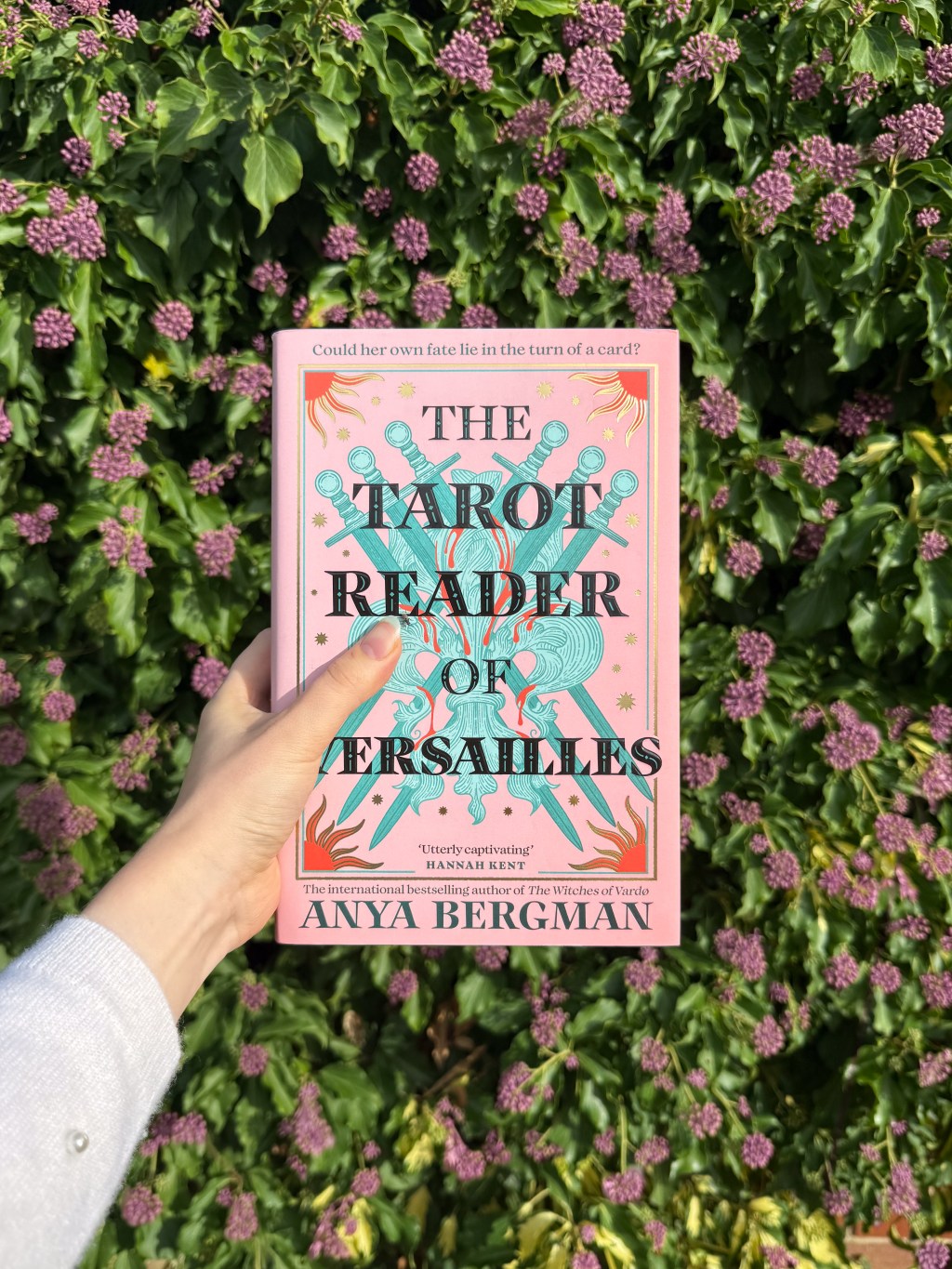
I picked up The Tarot Reader of Versailles by Anya Bergman after seeing it talked about quite a lot and then spotting it in Sainsbury’s for about £8 (plus it has a very pretty cover).
That was enough to get me interested, but the setting did most of the rest.
The French Revolution is one of my favourite periods of history, and Les Misérables is my favourite film/show, so a novel set around France with tarot, prophecy and political upheaval was always going to be an easy sell for me.
This The Tarot Reader of Versailles review is a very positive one overall: I gave it 4/5. I loved the setting, the history, the characters and the supernatural structure, but the pacing towards the end stopped it from becoming a full five-star read.
Buy The Tarot Reader of Versailles →
What is The Tarot Reader of Versailles about?
The novel is set during the early days of the French Revolution and centres on two women with very different abilities.
Marie Anne Adelaide Lenormand can use tarot to see the future, while Cait can see into the past through touch.
I loved this contrast. One character is looking forward. One is looking back. And both of them are living through a time of turmoil where the present is changing completely.
The idea could easily have felt gimmicky, but it actually gives the novel a really strong structure and makes the supernatural element feel genuinely connected to the history rather than just haphazardly layered on top.
The French Revolution and Paris setting
I was always going to enjoy this part.
The French Revolution is one of those periods of history I find endlessly fascinating, and there is something particularly compelling about reading a novel set against Paris and Versailles when you already know how dramatically that world is going to change.
Lenormand’s and Cait’s proximity to the royal family gives the book a bit of glamour, but there is obvioulsy also that constant sense of instability underneath it.
The old world order is still functioning, but you know it cannot last. The tension continues to rise as the pages progress.
How the tarot and supernatural elements work
I really liked that the tarot was not just there for the atmosphere. It actually matters to the structure of the book.
Lenormand’s ability to see the future us balanced by Cait’s ability to see the past, and that creates a really interesting push and pull between memory, fate and what people think they can control.
It works especially well in a story about revolution. There is something quite fitting about characters trying to understand what has happend and what might happen next while the world around them is becoming increasingly unpredictable. I have to admit I took particular pleasure when morally-questionable characters received unfavourable tarot readings.
The real Marie Anne Lenormand
It was really interesting to discover that Marie Anne Adelaide Lenormand was a real historical figure.
She became a well-known fortune-teller in revolutionary and Napoleonic France, and knowing that added another layer to the novel for me.
It made the story feel as though it was sitting somewhere between documented history and invention, which is often what I enjoy most in historical fiction.
The characters
I liked both central characters and, importantly, they did not feel interchangeable.
Their abilities are different, their perspectives are different and their relationships with the political events around them are different.
The book also gives them enough personal motivation that they do not simply exist to move the historical plot forward.
That mattered to me because I was invested in what happened to them, not just in the setting.
Where the pacing lost me
My main issue was the pacing towards the end.
For a book set against revolution, danger and political upheaval, I expected the final part to feel more urgent than it did.
Instead, I found that it could probably have been wrapped up a little bit earlier than it actually did.
It wasn’t enough to spoil the book for me, but it was noticeable.
That is really what kept this at 4/5 rather than 5/5.
Is The Tarot Reader of Versailles worth reading?
For me, yes.
I really liked the setting, the historical backdrop, the characters and the way the past-and-future structure was handled.
It also gave me more than I expected becaues the tarot element actually shaped the story, and I was worried coming into the book that it might have felt gimmicky and I might fail to get invested.
The ending was a little slower than I would have liked, but overall this was exactly the type of historical fiction I tend to enjoy: immersive, political, slightly strange and rooted in a period I already find fascinating.
Rating: 4/5
 Books With Megz
One response to “The Tarot Reader of Versailles by Anya Bergman: Revolution, Tarot and a 4-Star Read”
[…] Read my full review of The Tarot Reader of Versailles →Buy The Tarot Reader of Versailles → […]
LikeLike