
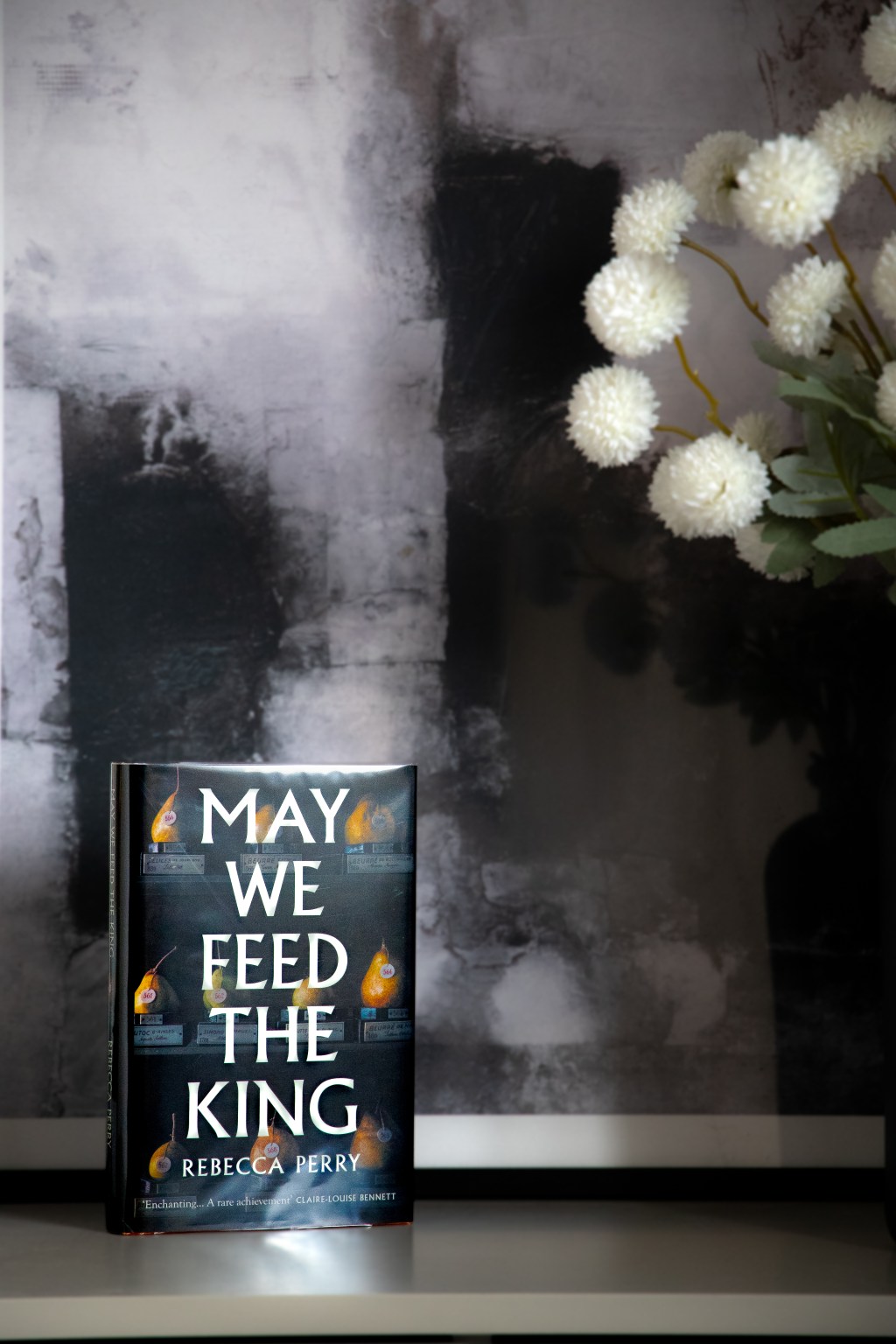
May We Feed the King was one of those books I picked up because the premise sounded unusual.
Historical fiction is one of my favourite genres, so I read quite a lot of it. That also means it can sometimes take a lot for a historical novel to feel genuinely fresh. When I spotted this on Goldsboro, though, the combination of a modern-day curator, an almost-forgotten medieval king and a story about how we interpret the past immediately caught my attention.
At the time, I wasn’t seeing it everywhere. I pre-ordered it because it sounded like my sort of thing.
A few months later, it has won the Waterstones Debut Fiction Prize and has been longlisted for the 2026 Booker Prize, so I’m very pleased to see it getting so much attention.
And having read it, I can see why.
What is May We Feed the King about?
The novel moves between two timelines.
In the present day, we follow a curator whose job involves dressing rooms in historic buildings to bring them to life for visitors. She is preparing a medieval palace for an anniversary exhibition, using replica food, props and historical records to recreate the world that once existed there.
As she delves further into the archives, she becomes increasingly fascinated by the palace’s almost-forgotten king.
Centuries earlier, that king had been pushed unexpectedly onto the throne after the deaths of his older brothers.
He is not an obvious ruler.
He has little appetite for power, war or ruthlessness, and as doubts begin to grow around the court about whether he is capable of ruling, the possibility emerges that someone else might be better suited to take his place.
The novel gradually brings those two lives – the curator looking backwards and the king living through the events she is trying to understand – closer together.
The king was the character I cared about most
I really felt for him.
There is something quite sad about a young man being thrust into a role he never wanted and then being judged against an idea of kingship that simply does not seem to fit him.
When we thing about medieval rulers, it is easy to fall back on familiar ideas: strength, conquest, ambition, ruthlessness.
But what happens when someone inherits a crown without any real desire for those things?
That tension was probably the part of the novel that interested me most.
The king doesn’t seem particularly cut out for the job, but that doesn’t necessarily make him weak or dishonourable. If anything, it raises more interesting questions about duty.
How much do you owe to a role you never chose?
And what does it mean to your duty when the qualities expected of you are completely at odds with your personality?
I loved the way it treats history as uncertain
The curator’s storyline is what makes the book feel quite different from more traditional historical fiction.
She isn’t simply discovering a neat account of the king’s lide.
She is working through manuscripts, records and fragments, trying to piece together who this person actually was.
And that made me think about how much of what we call “history” depends on who happened to write something down.
Who created the record?
What did they want people to believe?
What disappeared?
What survived?
And how much of the version we accept as truth centuries later was shaped by propaganda or interpretation?
I found that side of the book fascinating.
We are watching the king live through events at the same time as watching somebody else centuries later try to understand those events from the evidence left behind.
It gives this novel the constant sense that history is never quite as fixed as we like to imagine.
The split timeline really worked for me
Split timelines can sometimes leave me impatiently waiting to get back to whichever storyline I prefer.
That wasn’t really the case here.
The present-day sections give the historical story another dimension rather than simply interrupting it, because the curator’s growing fascination with the king becomes part of the novel itself.
The writing suited the story
I also really liked the writing.
It is quite restrained, but still vivid enough that I could properly picture the palace, the rooms and the atmosphere around the king’s court.
That mattered because so much of the novel is about spaces and objects — rooms being staged, replica food being arranged, historical environments being reconstructed.
The writing makes those details feel tangible without drowning the story in description.
And despite all of the ideas running underneath it — history, power, memory, duty and storytelling — I never found it dense.
What stood out to me
I read a lot of historical fiction, and this just felt like a slightly different proposition.
It isn’t simply a story set in the past.
It is also about how we tell stories about the past.
The extra layer is what made it memorable for me.
You have the drama of a reluctant medieval king trying to survive a role he was never prepared for, but you also have someone centuries later attempting to reconstruct his life from incomplete evidence.
It gives the novel something more to say than simply, “here is what happened.”
Final thoughts
I really enjoyed May We Feed the King.
It is unusual, thoughtful and exactly the kind of historical fiction I like discovering – a book that gives me the period detail and atmosphere I want from the genre, but approaches it from an angle I haven’t read dozens of times before.
The king’s story was particularly affecting, and I loved the questions the novel raises about duty, power and how historical reputations are created.
If you already enjoy historical fiction but want something that feels a little less conventional, I would absolutely recommend this.
4.5/5
Read this if: you like historical fiction about power, reluctant rulers, archival mysteries and the ways the past gets rewritten.
Like books that give you something to talk about afterwards?
Join The Sunday Shelf for weekly book recommendations, reviews and whatever I’m reading that week.
 Books With Megz
One response to “May We Feed the King by Rebecca Perry: Historical Fiction That Feels Genuinely Different”
[…] Read my full review of May We Feed the King →Buy May We Feed the King → […]
LikeLike